
Designing for Learning in the Nordic Countries (DLiNC)
It is by no means a trivial task to involve students as co-designers of teaching and learning. As pointed out by Colin Bryson, Catherine Bovill, Mick Healey, and many others, partnership can take many forms. It may, for instance, include former or current students on a given course, address both the form and/or content of teaching, involve different kinds of rewards, and serve a range of purposes.
In DLiNC’s Nordic context, it became clear early in the project that students were often absent from the design process despite a strong political desire — and, in some Nordic countries, even a formal requirement — to involve them. However, there is no clear guidance on how this involvement should take place, and the inherent power dynamics between students and educators pose an obvious barrier. This challenge is precisely what The Learning Design Game, developed by the Nordplus DLiNC network in collaboration with students and educators across the Nordic countries, seeks to address.
By engaging students and educators in collaboratively discovering problems and designing solutions to common challenges — such as student involvement, student-centred learning, and lack of alignment — the game creates a space for an open and “safe” dialogue about teaching quality and how learning experiences can be organised to better meet students’ needs and expectations.
This is useful for improving teaching and learning in higher education in general.
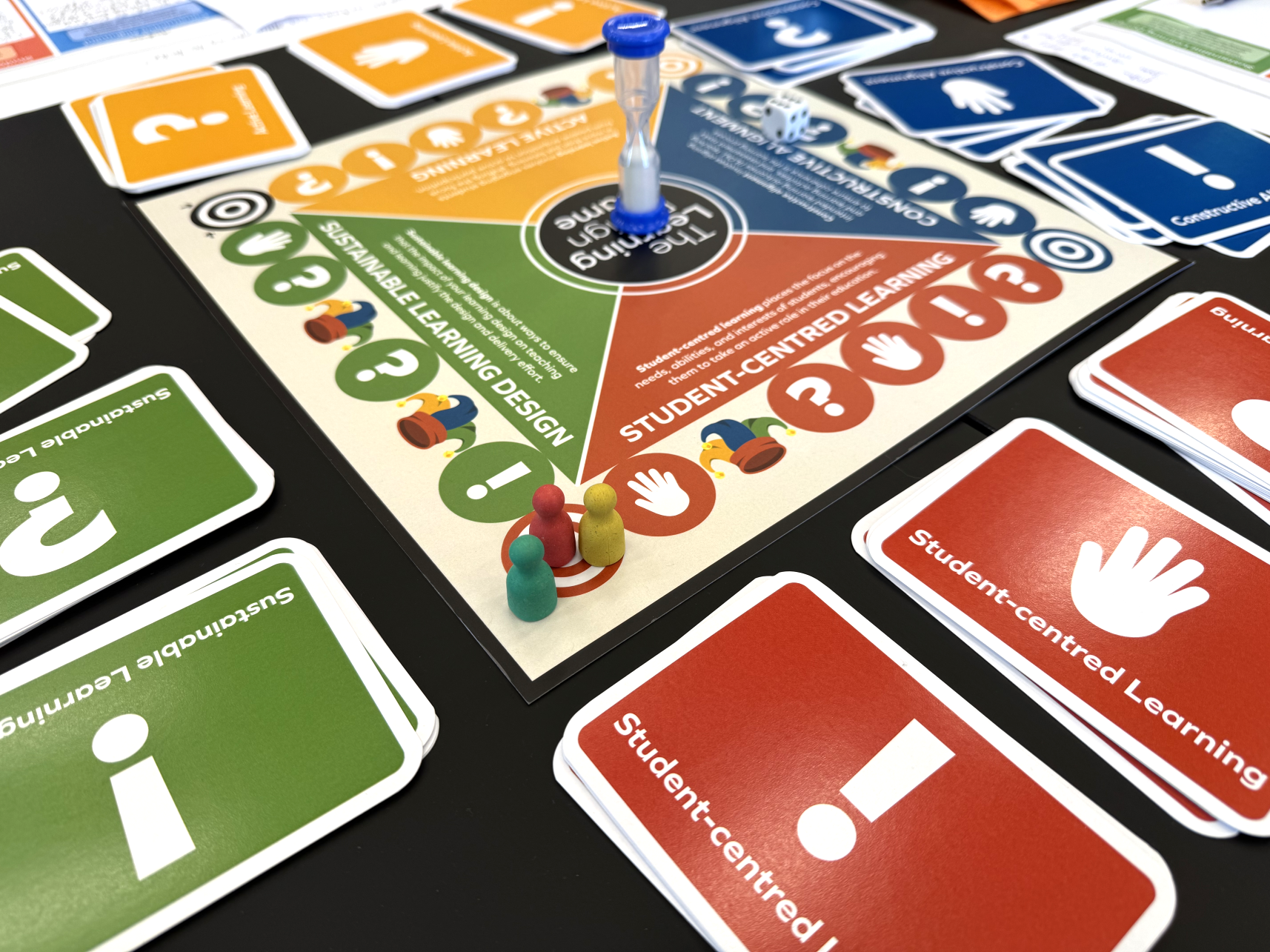
As of this writing (27 October 2025), the first beta version of the game has been developed and presented at a workshop in Aarhus on 16 September. The final version is expected to be ready by summer 2026.
Back to main page Definition of Learning Design